
Equip Yourself With Insight
Enabling Responsible Use of Large Language Models: Appian Data Fabric and Process Flow
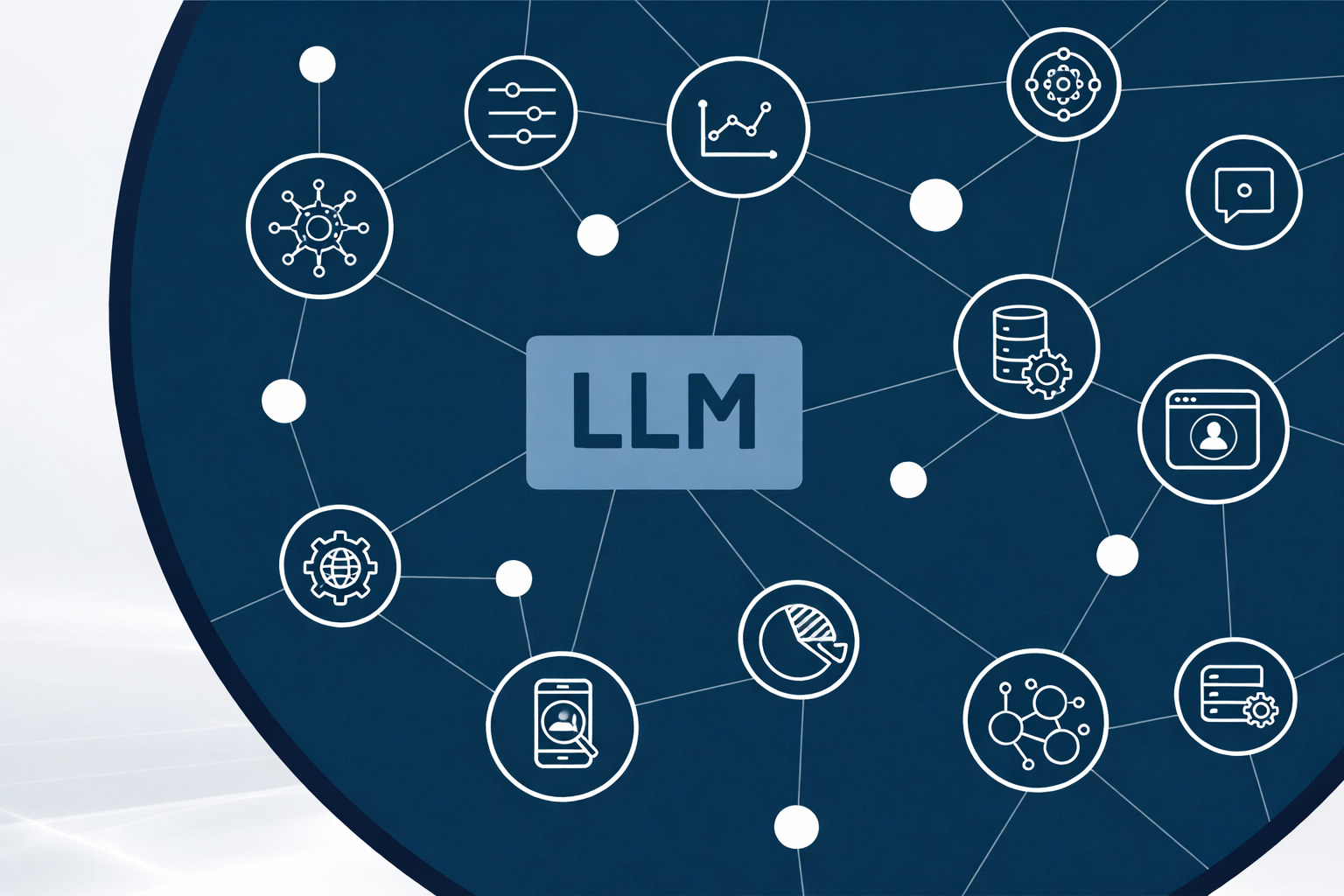
At Supporting Effort, we work closely with organizations operating across distributed environments, where clear, timely reporting from remote personnel is critical to mission success. In these settings, where teams are tracking supplies, environmental conditions, or personnel status across disrupted, disconnected, intermittent, and low-bandwidth (DDIL) conditions, digital information can be fragmented and connectivity can be inconsistent. Still, reporting must remain reliable no matter the environment. We understand that Large Language Models (LLMs) alone cannot solve this challenge—they require structure, data governance, and accountable workflows.
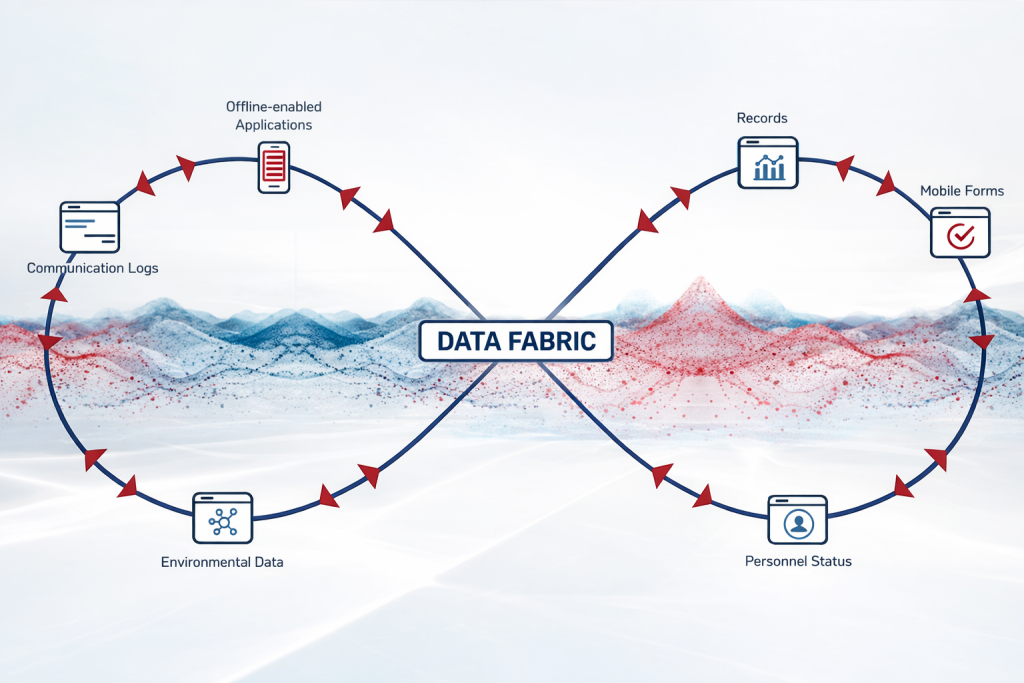
Appian’s Data Fabric and process automation capabilities provide that foundation, enabling responsible use of LLMs while maintaining traceability, transparency, and accuracy throughout the reporting lifecycle. It unifies information from multiple systems into a single, coherent layer. Rather than forcing users to navigate separate applications, the Data Fabric organizes all that input into a consistent model, enabling secure access to and updates of supply records, personnel status, environmental data, and communication logs.
Remote teams, even in low-bandwidth environments, can submit status updates via mobile forms, offline-enabled applications, or voice-to-text. The Data Fabric ensures these updates are timestamped, auditable, and traceable to their source.
Appian also complements the LLM by defining how information moves through the organization. The LLM can hold a natural-language conversation—such as asking a remote team, “What is your current fuel level?” or “What is your current water supply estimate?” and translate the worker’s response. The model determines the next steps: whether to trigger an alert, require supervisor review, or route to another team.
This removes the burden of navigating systems or determining next steps, allowing team personnel to move faster and stay focused on the mission while decisions happen automatically and in accordance with established protocols. It also maintains oversight and ensures every report adheres to the correct procedures, even with the interaction feeling like a natural conversation.
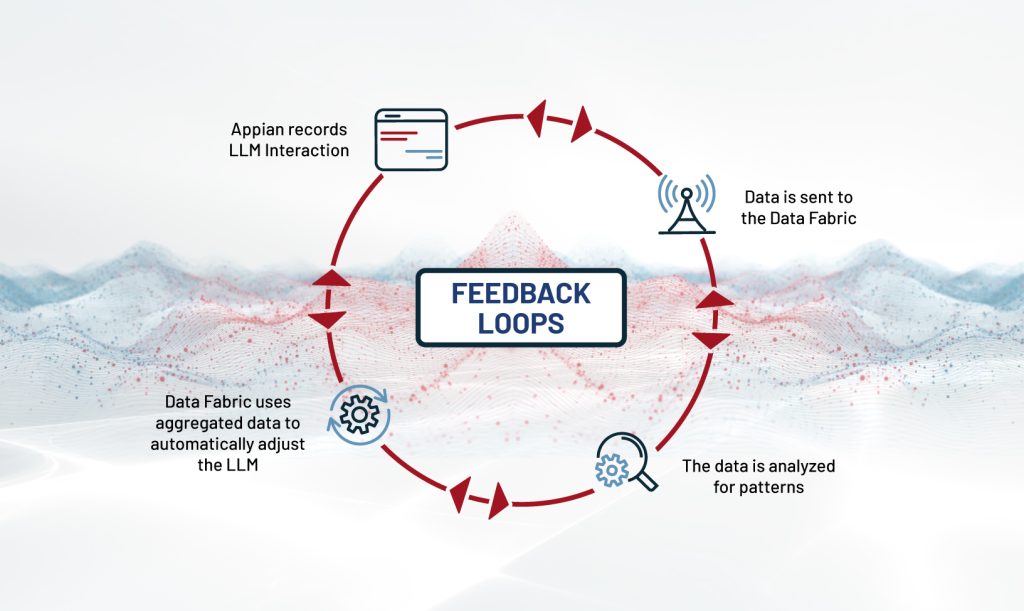
Feedback loops are equally important. Appian records each interaction—what the LLM asked, how the worker responded, and what actions were taken—and sends that information back through the Data Fabric. This allows the organization and the AI to analyze patterns, refine workflow steps, and improve how the LLM communicates. For example, if multiple remote teams consistently ask for clarification on how to report water purification levels, the system can automatically adjust the prompt’s wording or add a brief instruction step. Over time, reporting becomes more accurate, and the LLM’s responses better reflect real operational needs and safety requirements.
Supporting Effort understands that the effectiveness of LLMs depends on the reliability of the information and the workflows that support them. Appian’s Data Fabric ensures the LLM draws from traceable, authoritative, “AI-Ready” data, while Appian Process Flow ensures actions are structured, compliant, and accountable. LLMs provide the conversational interface; Appian ensures the process is repeatable, governed, and aligned to mission requirements. By combining these capabilities, organizations can safely leverage natural language interaction to support remote personnel while maintaining confidence in the data, the process, and the decisions.
Reach out to us to learn how our AI-enabled, Appian-powered solutions can transform the way your teams report, communicate, and operate at the tactical edge.