
Connecting the Army Tactical Edge
Connecting the Army Tactical Edge to the Enterprise for Ammunition
Readiness
Ammunition readiness depends on more than monthly inventory counts. It depends on the Army’s ability to see, validate, prioritize, move, consume, and account for Class V supplies across every echelon, from the Soldier at the tactical edge to enterprise logistics and financial systems in near-real time.
Today, that connection is often harder than it should be. Tactical units generate critical ammunition data during real operations: on-hand balances, consumption, resupply requests, transportation updates, location changes, chain-of-custody events, and other events. Enterprise systems hold authoritative information such as authorizations, requisitions, planned distributions, inventories, transportation statuses, reconciliations, and
accountability. The challenge is that these two worlds do not always synchronize, especially in disconnected, degraded, intermittent, or limited bandwidth (DDIL) environments.
This gap creates operational risk because commanders and sustainment leaders may be forced to make ammunition decisions based on incomplete reports, manual spreadsheets, incomplete reconciliations, or outdated running estimates. In a contested environment, that delay can affect prioritization, operational planning, accountability, and readiness.

Supporting Effort’s value is straightforward: connect the tactical edge to the enterprise for ammunition. At the edge, Soldiers and tactical systems are closest to the truth of execution. They are the ones who receive, issue, move, fire, return, request, inventory, or reallocate ammunition. This operational data must be digitally captured at origin, validated as close to the source as possible, and synchronized with enterprise systems when connectivity allows.
At the enterprise level, logistics and financial systems provide the authoritative backbone for planning, accountability, auditability, and resource management. That information must flow back to tactical formations so leaders can see authorizations, planned distributions, transportation statuses, support priorities, and the broader ammunition picture.
The real modernization opportunity is not simply another application or isolated workflow. It is a higher-level integration model that creates a trusted bridge between tactical execution and enterprise accountability.
That bridge should support five outcomes:
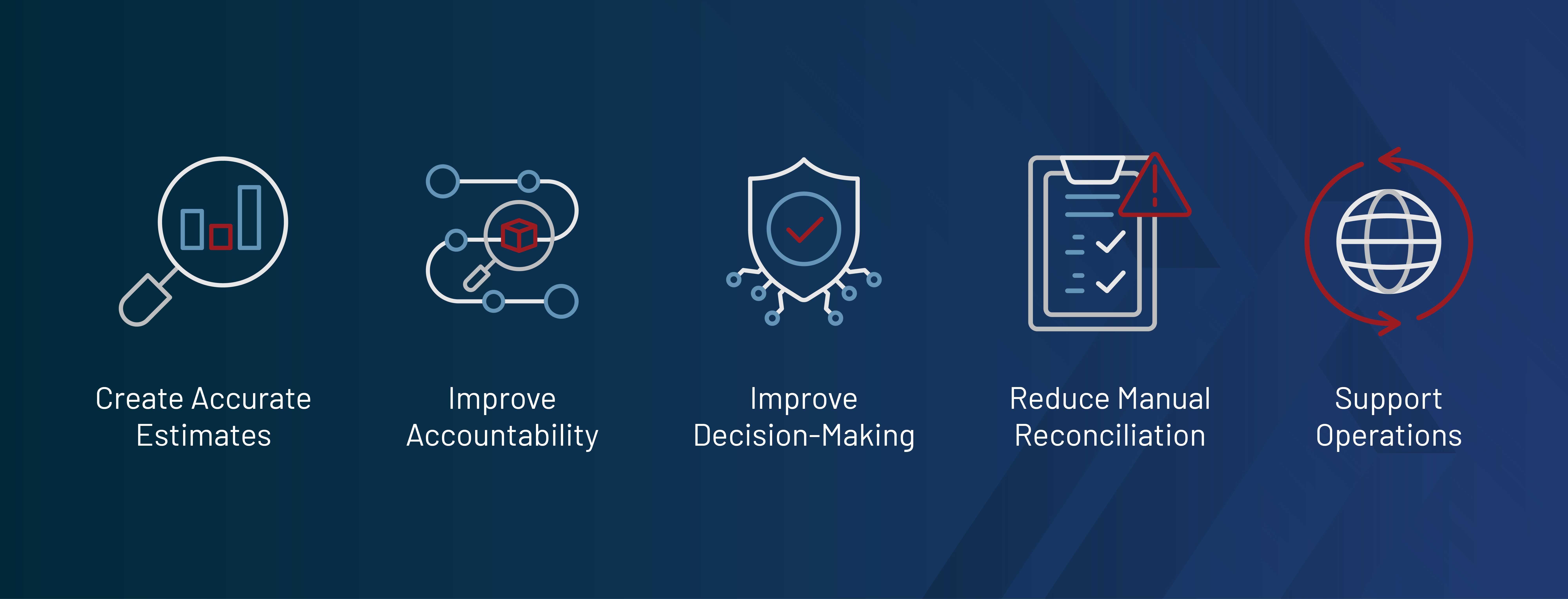
First, it should create a more accurate ammunition running estimate by continuously updating Class V status with tactical issues, consumption, inventory, and movement data.
Second, it should improve accountability by preserving the chain of custody to the final user, transaction history, and audit-ready records throughout the ammunition lifecycle.
Third, it should improve decision-making by giving commanders and sustainment personnel a common operational picture built from synchronized tactical and enterprise data.
Fourth, it should reduce manual reconciliation by replacing disconnected reporting processes with validated, repeatable data flows.
Fifth, it should support operations in contested environments by allowing units to continue capturing and using ammunition data even when connectivity is limited, then synchronize updates once communications are restored.
For ammunition, modernization has to respect the reality of the mission. Class V operations involve safety, security, transportation, compatibility, consumption, storage, forecasting, financial accountability, and operational urgency. A useful solution cannot assume perfect connectivity or clean handoffs between systems. It must work across echelons, preserve authoritative sources, and support the Soldier at the point of execution.
Supporting Effort will help close that gap by converting tactical ammunition activity at the edge into enterprise-relevant data in near real time. The result is better accountability, faster resupply decisions, improved forecasting, and a common operational picture from Soldiers executing at the edge to enterprise systems.
The future of ammunition readiness depends on connecting what is happening at the edge with what the
enterprise needs to know to make financial and logistics decisions. Supporting Effort will help make that
connection practical, secure, and operationally relevant.