
Modernizing in Motion
How Supporting Effort’s DeliveryIQ Creates Mission Value Across Veteran Digital Services
Mission value should be the defining measure of digital modernization.
For Veteran digital services, success is not determined by how much technology a team produces. It is determined by whether Veterans receive reliable, secure, accessible, and responsive services—and whether each delivery increment improves mission outcomes.
Artificial intelligence is reshaping software delivery by helping teams clarify requirements, accelerate development and testing, identify defects earlier, and make better decisions from operational data. But AI’s value is not measured by the volume of code or content it generates. It is measured by how effectively teams deliver secure, maintainable, and accepted capabilities that advance the mission.
In mission-critical environments, modernization cannot impact essential services. Veterans must retain access while the software, architecture, cybersecurity, and operating model evolve.
Modernization must happen in motion.
Supporting Effort’s DeliveryIQ framework provides a model for doing that. It integrates AI, automation, analytics, and operational intelligence across the lifecycle—from transition and planning through development, security, deployment, operations, and continuous improvement. Combined with agile product delivery, it connects strategy, engineering, cybersecurity, operations, and user needs around one objective: measurable mission value while essential services continue running.

From Technology Output to Mission Outcomes
AI can analyze requirements, generate specifications, assist with code and testing, review cybersecurity findings, automate infrastructure, correlate operational data, and prepare documentation. Activity alone, however, does not demonstrate mission impact.
The more meaningful question is: What accepted outcome did the AI-enabled workflow help deliver?
Mission value may include a simpler Veteran experience, faster delivery of usable capabilities, improved availability, earlier resolution of cybersecurity risk, reduced technical debt, stronger accessibility, faster service restoration, and more reliable integration.
Teams move beyond prompts, code volume, document counts, and ticket closure. They measure whether a capability was accepted, secured, deployed, and shown to improve an operational or Veteran-facing outcome.
Mission value—not technical volume—becomes the organizing principle.
Supporting Effort’s DeliveryIQ Across the Digital Service Lifecycle
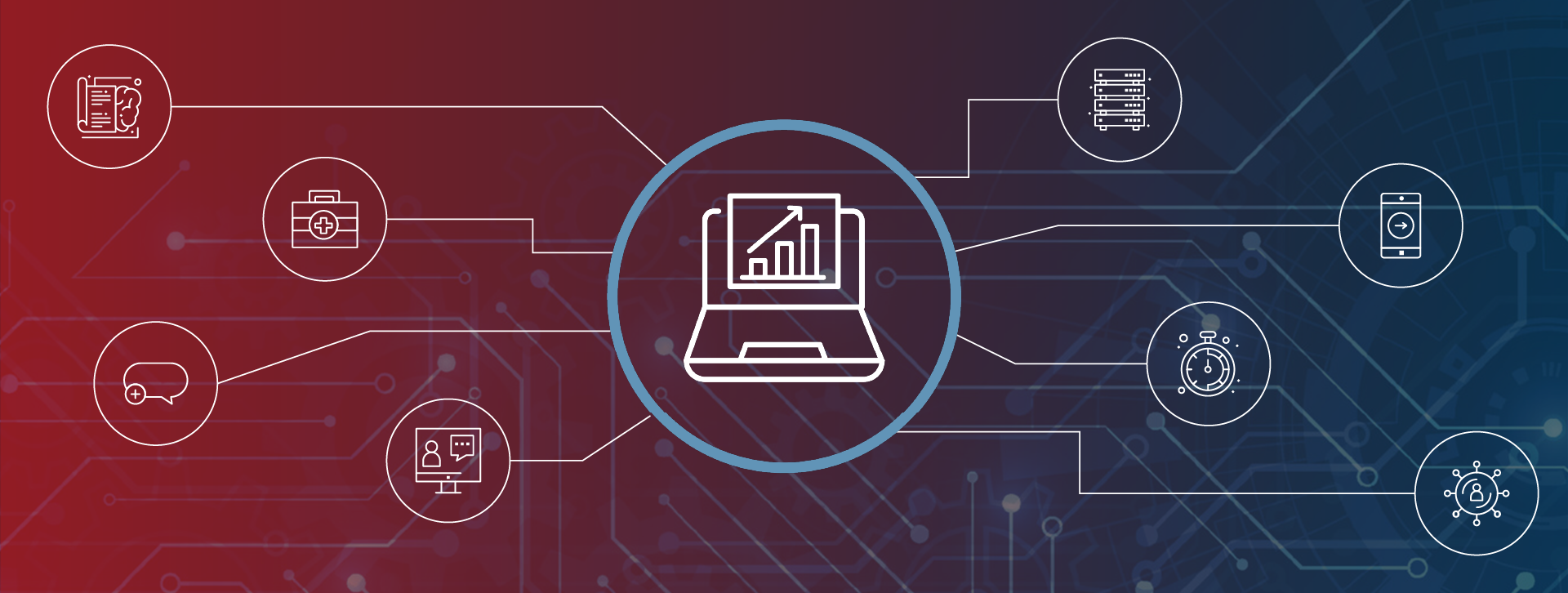
Supporting Effort’s DeliveryIQ is not a single AI tool. It is an integrated framework that applies intelligence across the disciplines required to modernize, secure, operate, and improve digital services.
During transition and discovery, AI can analyze knowledge, map dependencies, identify risk, and accelerate onboarding while protecting continuity.
During product planning and development, AI can assist with requirements, user stories, acceptance criteria, specifications, code, testing, and documentation. The objective is not simply faster production. It is better-prepared work, less rework, and a shorter path from an identified Veteran need to an accepted capability.
Within cloud, platform, and cybersecurity operations, AI can support automation, configuration management, performance optimization, monitoring, and remediation. Across service delivery, observability, reliability engineering, and enterprise integration, it can correlate signals, detect anomalies, analyze incidents, map dependencies, and recommend corrective actions.
Together, these capabilities create an integrated delivery and operating system with measurable impact—not a collection of disconnected AI experiments.
Agile Delivery Turns Intelligence into Action
Supporting Effort’s DeliveryIQ becomes most effective when combined with an agile delivery model.
Cross-functional teams work from a shared backlog organized around Veteran needs, mission priorities, performance, cybersecurity, accessibility, technical debt, and modernization. Work is delivered in manageable increments, evaluated against acceptance criteria, and refined through feedback from Veterans, stakeholders, testing, security reviews, and production operations.
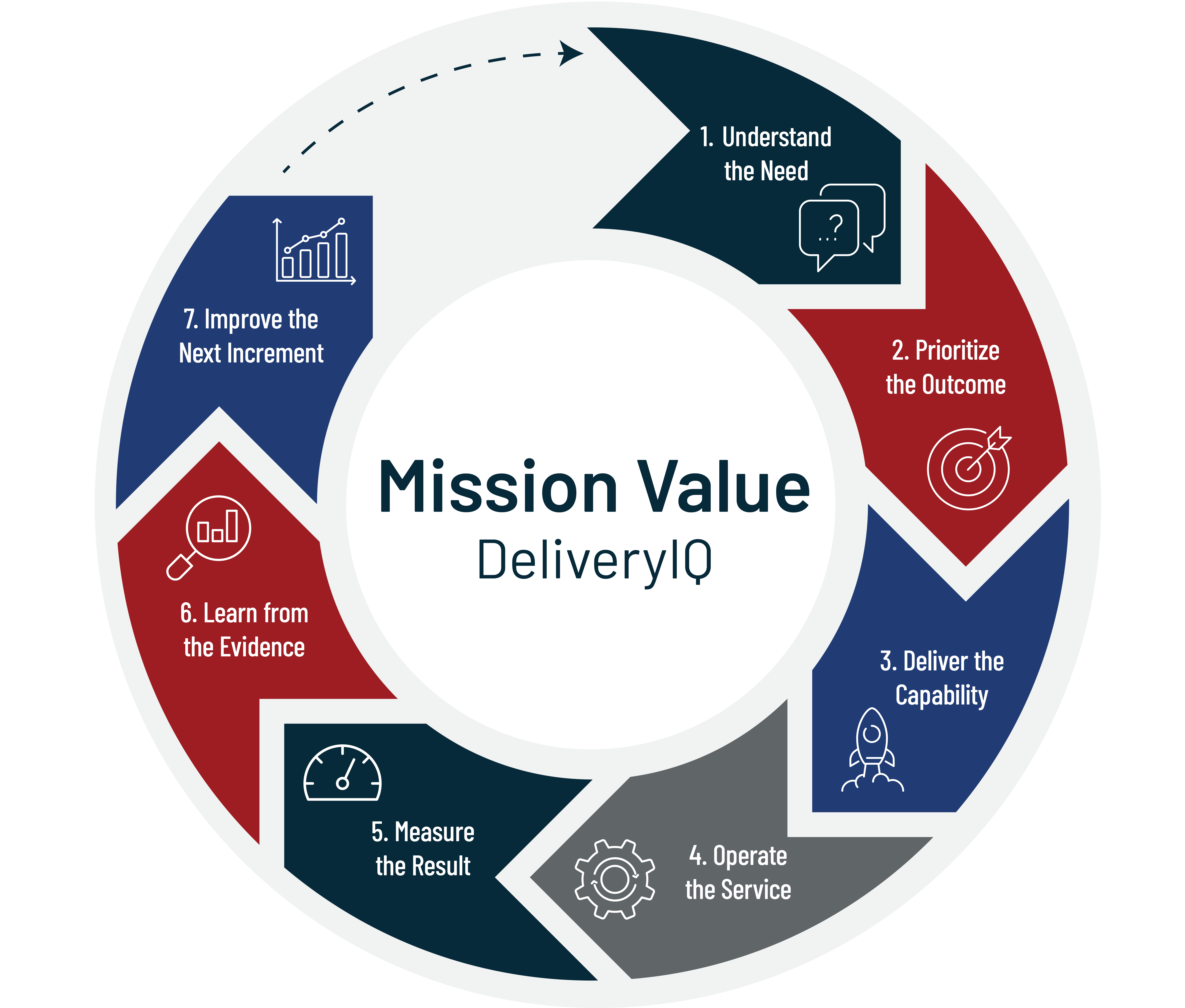
This creates a continuous mission-value cycle:
Understand the need. Prioritize the outcome. Deliver the capability. Operate the service. Measure the result. Learn from the evidence. Improve the next increment.
Modernization and sustainment are no longer competing workstreams. Production incidents generate reliability improvements. Cybersecurity findings become backlog priorities. User feedback influences design. Repeated service requests identify automation opportunities. Technical debt is evaluated according to its mission, security, reliability, and cost impact.
Operational evidence continuously informs what should be modernized next.

Observability and Incident Response in Practice
AI-enabled observability and incident response illustrate how Supporting Effort’s DeliveryIQ works within this model.
A digital service may generate information across logs, metrics, traces, service desk tickets, deployment records, and dependency alerts. Without correlation, operations teams can spend significant time moving between tools, eliminating duplicate signals, and determining what changed.
Supporting Effort’s ObservabilityIQ and Site Reliability EngineeringIQ can correlate those signals into an operational picture. AI identifies probable causes, affected Veteran-facing services, related changes, and approved diagnostic actions.
It also prepares incident summaries and post-incident reviews, allowing engineers to focus on restoring service, resolving root causes, and preventing recurrence. The evidence can become backlog priorities such as stronger monitoring, improved testing, resilient integrations, rollback capabilities, runbook automation, or technical-debt remediation.

Human Accountability Remains Essential
AI should accelerate analysis and execution without obscuring responsibility.
Product owners remain accountable for priorities. Engineers remain responsible for software quality. Cybersecurity professionals assess risk. Service owners evaluate mission impact. Incident leaders make escalation and restoration decisions. Authorized personnel retain approval authority.
AI may identify a pattern, generate a recommendation, draft an artifact, or propose a corrective action. A qualified person remains responsible for reviewing the output and making the consequential decision.
AI accelerates the work. Accountable people govern the outcome.

Measuring AI Through Mission Value
Every Supporting Effort’s DeliveryIQ capability should be tied to a defined workflow, accountable decision-maker, baseline, target outcome, and verification method.
Measures may include accepted mission value per increment, delivery lead time, defects and rework, availability, incident detection and restoration time, cybersecurity remediation, accessibility results, technical-debt reduction, human review effort, and cost per accepted outcome.
These measures must be considered together. Faster delivery is not valuable to the mission if quality declines. Lower cost is not valuable if coverage weakens. Faster incident response is not valuable if it creates unsafe changes. More AI-generated output is not valuable if teams spend additional time correcting, rejecting, or securing it.
Supporting Effort measures DeliveryIQ through sustained improvement in accepted mission value, not unsupported productivity assumptions. AI-enabled capacity should first increase the amount, quality, and speed of mission value delivered before supporting broader workforce or cost conclusions.

Modernization Without Mission Disruption
The strongest application of AI in public-sector technology is helping accountable teams understand complex environments, make better decisions, identify risk earlier, reduce repetitive work, and focus capacity on the outcomes that matter most.
For Veteran digital services, that means modernizing platforms while operating them. It means delivering new capabilities while improving reliability, strengthening cybersecurity while accelerating delivery, and using operational evidence to guide the next modernization priority.
Supporting Effort’s DeliveryIQ brings AI and agile delivery together around this purpose.
That is modernization in motion: keeping the mission running, improving the system with every delivery increment, and turning technology investment into outcomes Veterans can experience.
In a follow-on article, we will take a closer look at how we measure AI’s contribution to mission value over time, including its relationship to delivery speed, quality, reliability, human effort, and cost. This perspective can help leaders assess whether AI is supporting greater throughput and lower cost per accepted outcome—not simply producing more activity.