
Strengthening Army Acquisition Operations
Empower the Workforce. Accelerate Execution. Deliver Mission Results
How modern business processes, secure automation, and connected information can improve Army acquisition support and enterprise performance.
Army acquisition organizations support some of the Department of War’s most complex and consequential missions, including air and missile defense, advanced aviation, and precision fires. At Army Contracting Command–Redstone Arsenal (ACC-RSA), these responsibilities translate into billions of dollars in annual contracting activity and thousands of acquisition actions requiring coordination, technical expertise, sound business decisions, and disciplined execution.
Behind every major acquisition is an experienced workforce supported by business processes, enterprise applications, information management, and collaboration tools. As acquisition demands increase, improving these supporting capabilities becomes essential to maintaining mission readiness and execution tempo. The modernization opportunity is not simply to introduce new technology. It is to make the Army acquisition enterprise more effective by returning time to its workforce, improving leadership visibility, and accelerating mission execution.
Empower the Acquisition Workforce
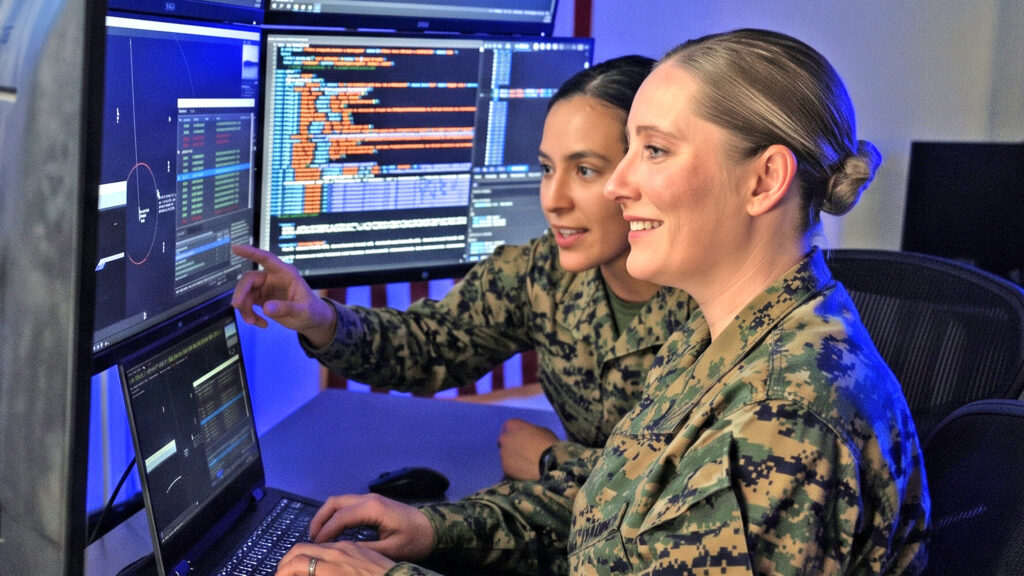
Consider the coordination required to support a major Army air and missile defense acquisition. Contracting professionals may need to manage requirements, coordinate technical reviews, route approvals, maintain acquisition documentation, reconcile information across systems, and provide leadership with timely status updates.
When these activities depend on disconnected spreadsheets, manual handoffs, and repetitive reporting, valuable workforce capacity can be consumed by administrative coordination. Modern business applications and secure workflow automation can streamline these activities while preserving the controls, accountability, and documentation required for federal acquisition.
Microsoft Power Apps, Power Automate, SharePoint Online, and Dataverse provide a practical foundation for modernizing these processes. The objective is to give acquisition professionals more time to focus on complex requirements, mission partners, and sound contracting decisions.
Improve Operational Visibility and Decision-Making
Major Army acquisitions require leaders to balance competing priorities, manage resources, coordinate across organizations, and identify issues before they affect execution. Yet critical operational information can be spread across applications, spreadsheets, reports, and disconnected processes.
Connecting authorized enterprise information through secure integrations and presenting it through Power BI dashboards can give leadership better visibility into workload, pending actions, processing times, bottlenecks, and performance trends. This supports more informed resource decisions and helps organizations identify where process improvements can deliver the greatest value.
The real benefit is not another dashboard. It is giving Army leaders timely, trusted information to improve enterprise performance and mission execution.
Proven Federal Experience Supporting Complex Operations
Supporting Effort brings hands-on experience modernizing federal business processes and sustaining enterprise Microsoft environments in production. At the Department of Veterans Affairs, our teams have delivered and sustained mission applications built on Dynamics 365, Power Platform, Dataverse, SharePoint, and Azure. That work includes a high-volume self-service claims solution that pulls together enrollment, financial, identity, and clinical data from authoritative sources and applies business rules to process eligible claims automatically.
Across these efforts, our personnel cover the full life cycle: workflow automation, enterprise integration, DevSecOps, and day-to-day production sustainment for systems that federal users rely on.
Army acquisition and VA business processes are different, but the modernization disciplines carry over directly: simplify complex workflows, connect authoritative data, automate repetitive work, protect sensitive information, and give leaders reliable visibility into operations. Supporting Effort brings those capabilities from live federal environments, not from a lab.

Modernize Without Disrupting the Mission
Army acquisition organizations cannot pause operations while their technology is modernized. Existing applications, workflows, information repositories, and enterprise services must remain reliable while new capabilities are introduced.
A practical approach combines protected sustainment capacity with incremental modernization, shared cybersecurity and governance controls, and government-prioritized delivery. Modernization should begin by understanding the mission process, identifying unnecessary administrative effort, and selecting the simplest authorized technology that delivers measurable improvement.
Success will be measured through reduced processing time, fewer manual handoffs, improved information quality, greater workforce capacity, stronger operational visibility, and reliable mission-support services.
Deliver Greater Mission Capability
The Army’s acquisition mission depends on its people. Technology delivers its greatest value when it enables those professionals to work more effectively, make better-informed decisions, and respond faster to mission requirements.
At Supporting Effort, our federal Microsoft modernization, workflow automation, enterprise integration, and sustainment experience reinforces a straightforward principle: modernization should strengthen the acquisition workforce, improve enterprise operations, and deliver measurable mission results.
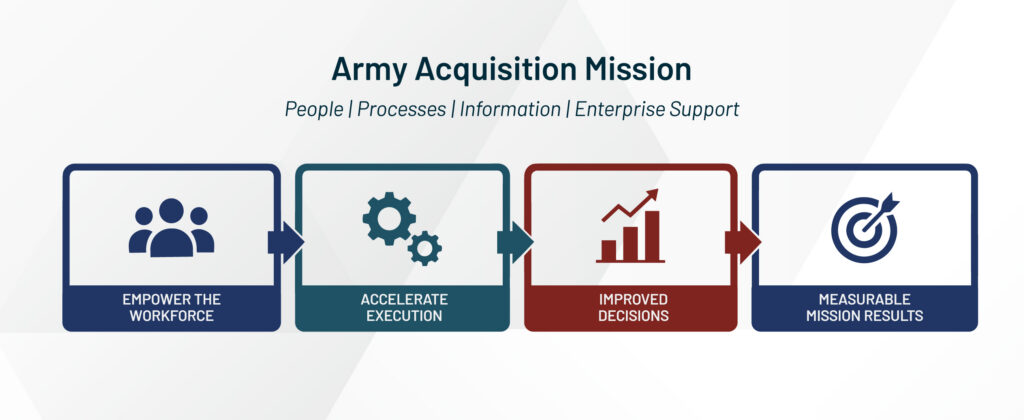
The opportunity is to connect people, processes, and trusted information so the Army can execute complex acquisitions with greater efficiency, accountability, and operational effectiveness.
Empower the workforce. Accelerate acquisition execution. Deliver mission results.